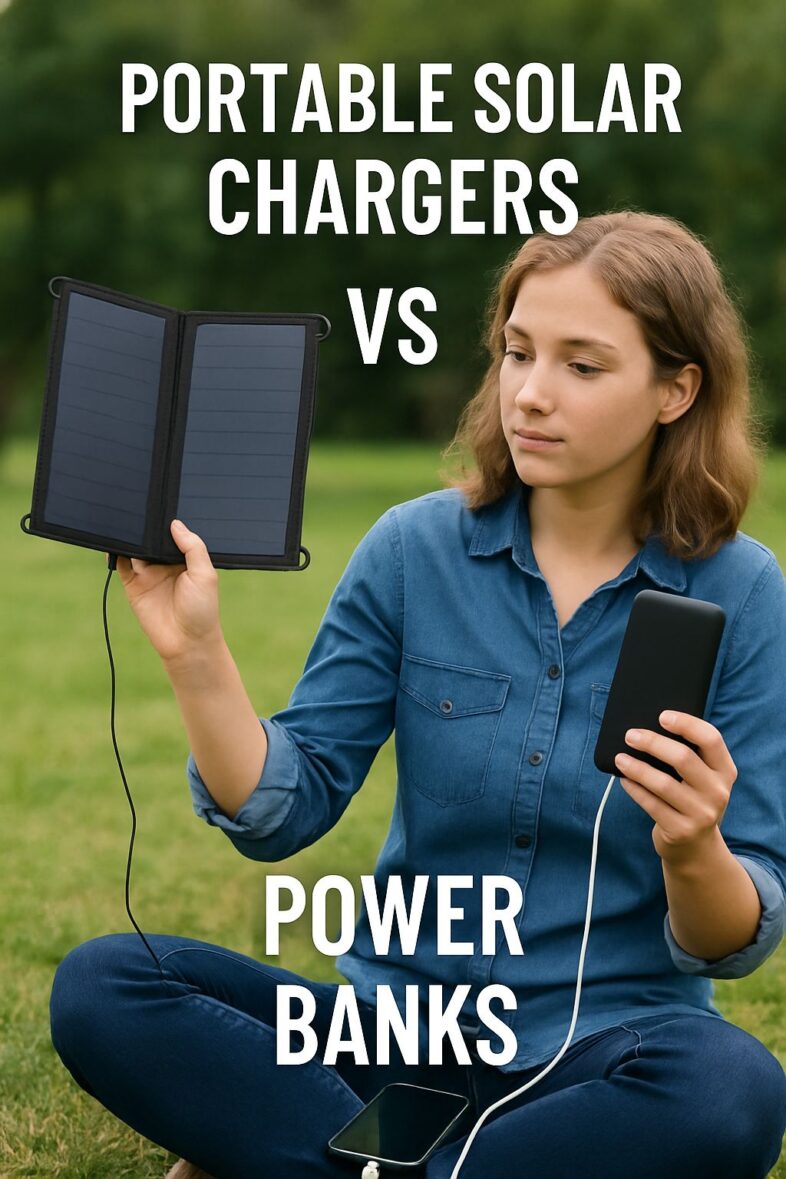
Comparing Portable Solar Chargers with Power Banks: Portable solar chargers provide direct power from the sun but lack storage, making them good for bright days, while power banks store energy in an internal battery for anytime use but need pre-charging. In this article, we discuss the best solution for reliable, off-grid power.
Portable Solar Chargers vs Power Banks – Main Points
- Solar chargers provide sustainable power for long periods of time off the grid, but they work best in direct sunlight and have slower charging times than power banks
- Power banks offer reliable and consistent charging regardless of weather conditions, but they have a limited capacity without access to power outlets
- When choosing a portable solar charger, focus on wattage (usually 5-25W), efficiency rating, and weatherproofing, not just battery capacity
- EcoFlow provides innovative solar charging solutions that balance reliability with sustainable energy harvesting for environmentally conscious travelers
- Hybrid solar power banks offer the best of both worlds, providing backup battery power with renewable charging capability for long trips
The eternal battle between convenience and sustainability is particularly evident in the world of portable charging. When you’re away from power outlets, your choice of power source can make or break your outdoor adventure. EcoFlow’s portable solar solutions are at the forefront of renewable charging technology, balancing efficiency with environmental awareness for today’s mobile lifestyle.
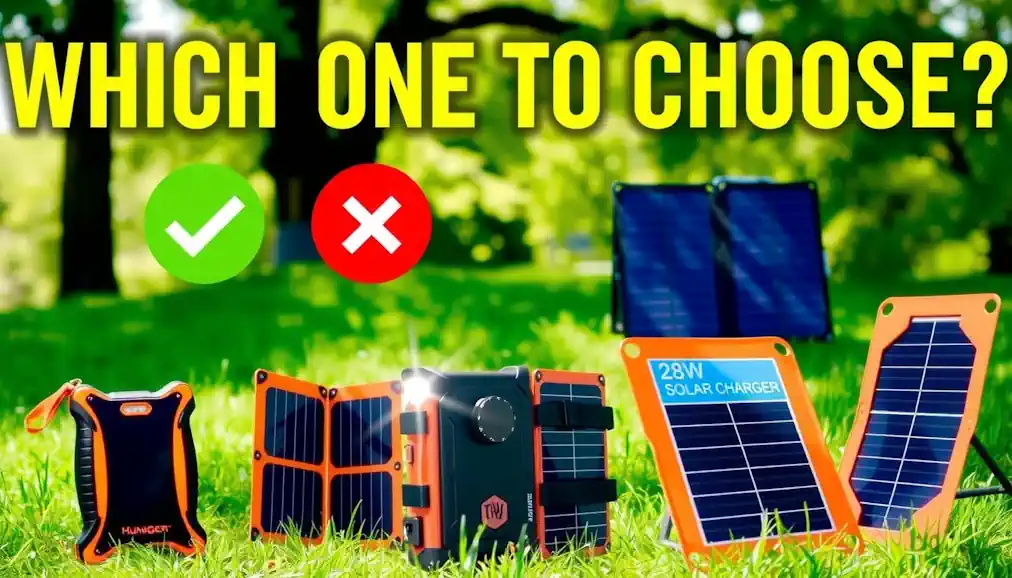
Why Your Power Choice Matters: Solar Chargers vs Power Banks
When deciding between solar chargers and power banks, you’re not just choosing how to keep your devices powered up. You’re also making a choice that affects your mobility, reliability, and environmental impact. Power banks provide immediate, weather-independent charging, but they eventually run out of juice if you can’t plug them into an electrical outlet. Solar chargers, on the other hand, can supply a potentially endless amount of energy, but they rely on good weather conditions and usually charge devices more slowly. It’s essential to understand these fundamental differences so you can choose the right power solution for your specific needs.
It’s also crucial to consider the environmental impact. Traditional power banks are essentially portable storage for grid electricity, which is often generated from fossil fuels. Solar chargers, on the other hand, capture renewable energy directly from the sun, resulting in a much smaller carbon footprint over their lifetime. This difference can be as important as performance specifications for environmentally conscious travelers.
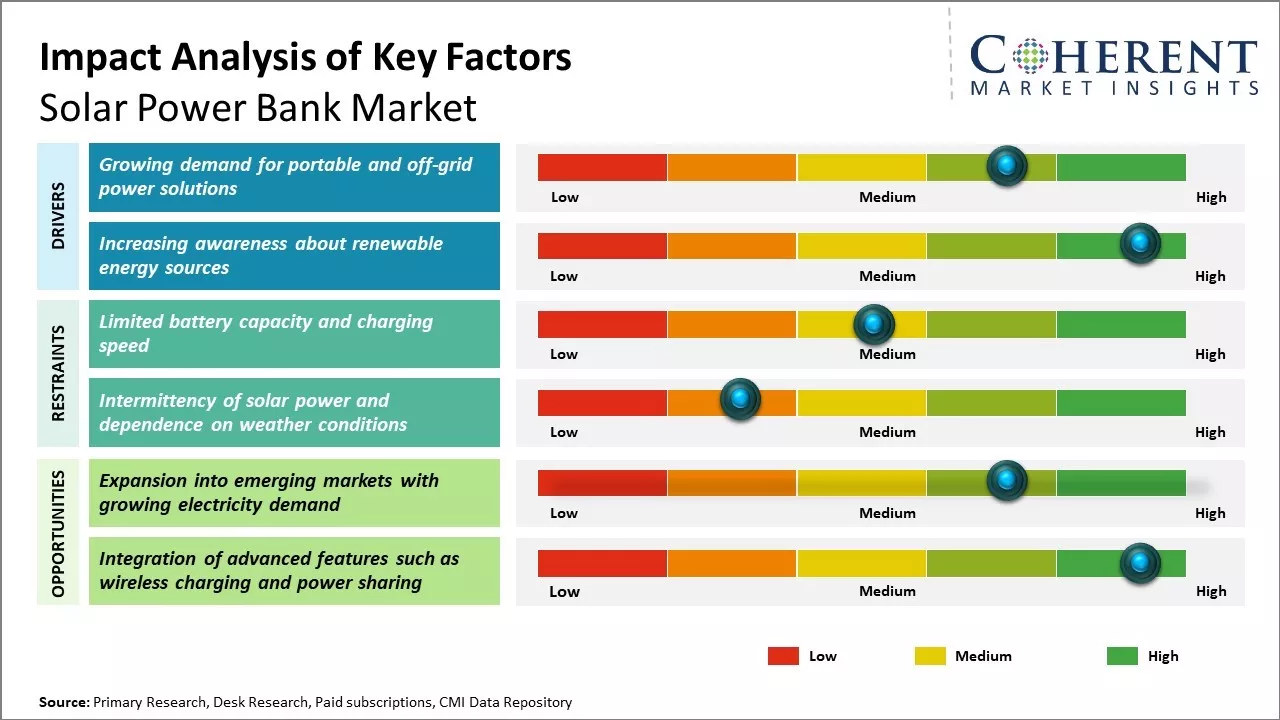
“Solar Power Bank Market Share and …” from www.coherentmarketinsights.com and used with no modifications.
Check Current PricesPower Banks: A Dependable Source of Energy When You Need It
Power banks are the simplest solution to portable charging: you store electricity and use it when you need it. Their reliability makes them perfect for short trips or as a backup power source when you need consistent and dependable charging performance. Power banks today range from emergency chargers the size of a lipstick to large units that can charge laptops and small appliances several times over.
The Functionality of Power Banks
Power banks are essentially portable batteries with an integrated charging circuit. They often employ lithium-ion or lithium-polymer cells, which are the same technology used in smartphones and laptops. The built-in battery holds electrical energy that can be sent to your gadgets as required via USB or other output ports. Overcharging, overheating, and short circuits are prevented by protective circuits in most models, making them relatively safe despite their high energy density.
Power banks are charged in two separate steps. First, the power bank is charged from a power source such as a wall outlet or a laptop USB port. Then, when needed, the stored energy is transferred to your device through an output port. This simple charge-and-discharge cycle makes power banks very easy to use.
However, it also creates a limitation: once the power bank is depleted, it can’t be used until it is reconnected to a power source. Portable Solar Chargers vs Power Banks
Understanding Battery Capacity
Power banks are often rated in milliampere-hours (mAh) or watt-hours (Wh), and the higher the number, the more energy it can store. However, these numbers can be deceptive because of conversion losses and overblown marketing claims. A power bank that is rated at 10,000mAh won’t actually provide 10,000mAh to your device. This is because of factors like voltage conversion, inefficiency in the circuit, and temperature. In reality, you can expect about 60-70% of the rated capacity to be available for your devices.
Let’s break this down in simpler terms. Most smartphones have batteries that range from 3,000-5,000mAh. So, a 10,000mAh power bank would give you about 1.5 to 2 full charges for your phone, not the 2-3 charges you might expect just by looking at the numbers.
Knowing this difference in real-world performance can help you set realistic expectations when considering Portable Solar Chargers vs Power Banks, for how long your power bank will keep your devices going when you’re out and about.
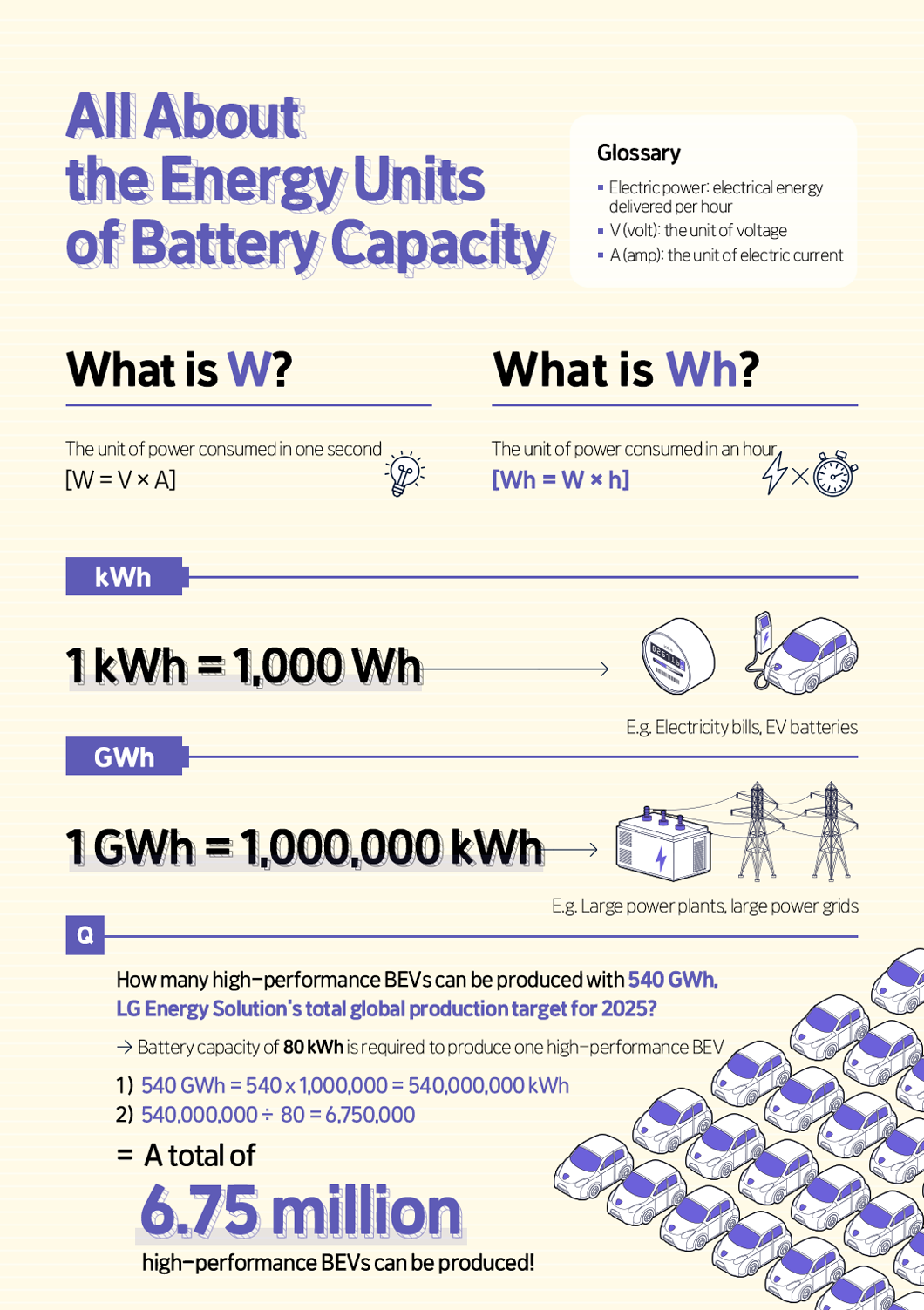
“Energy Units of Battery Capacity …” from inside.lgensol.com and used with no modifications.
Check Current PricesHow Fast Can They Charge?
Today’s power banks come with different fast-charging features such as Power Delivery (PD), Quick Charge, and other special standards from companies like Samsung and Huawei. The charging speed of a power bank is determined by its output power, which is measured in watts. If you’re on a budget, you can find power banks that offer 5-12W of power. However, if you’re willing to spend more, you can get power banks that can deliver 60W or more, which is enough to charge laptops and other devices that require a lot of power.
Considerations of Size and Weight
With the current technology of batteries, there is an unavoidable correlation between capacity and physical size. This means that power banks with a higher capacity will be larger and heavier, which is an important consideration for hikers, backpackers, and travelers who are concerned about the weight of their packs. Compact units with a capacity of 5,000-10,000mAh typically weigh about 4-8 ounces (113-227g), which makes them easy to fit in your pocket. However, models with a high capacity of 20,000mAh or more can weigh a pound (454g) or more, which is a more significant addition to the weight of your gear.
While recent improvements in battery chemistry and manufacturing have increased energy density, allowing for more power in smaller packages, the basic principle remains: more power equals more weight. This tradeoff is particularly important when comparing power banks to solar alternatives for longer trips.
Usual Lifespan and Battery Wear and Tear
Just like all lithium-based batteries, power banks have a limited lifespan that is determined by charge cycles and usage habits. Most high-quality power banks maintain around 80% of their original capacity after 300-500 complete charge cycles. This wear and tear is gradual but unavoidable, and it is caused by chemical changes within the battery cells themselves. Environmental factors such as heat and extreme cold can speed up this wear and tear, which is something to keep in mind if you plan to use your power bank in harsh conditions.
Solar Chargers: Tapping into the Power of the Sun
Solar chargers are changing the game when it comes to portable power. Instead of just storing electricity, they are actively producing it by transforming sunlight into electrical energy that we can use. This approach to renewable energy creates a whole new way of thinking about power availability—one where the availability of power depends on the environment, but could theoretically never run out.
Categories of Portable Solar Chargers
There are three primary types of portable solar chargers, each with unique benefits depending on your needs. Folding panel chargers are made up of several solar panels that are connected by hinges or fabric, which allows you to fold them up for travel and spread them out for charging. Rollable or flexible solar panels are lightweight, sometimes even waterproof, and use thin-film technology to create a charging surface that can be rolled or folded for easy storage. Integrated solar power banks are a combination of solar panels and battery storage in one device, providing the convenience of a power bank with the ability to recharge using solar power.
For practical purposes, when considering Portable Solar Chargers vs Power Banks, it’s crucial to understand the difference between solar panels that charge directly and those that come with built-in batteries. The direct-charging models need to be connected to your device while in the sun, which isn’t practical for charging while you’re hiking or during cloudy weather. The models that come with built-in batteries or separate energy storage fix this issue by storing solar energy for use later on, which is a lot more flexible.
Understanding Solar Panel Efficiency
Solar panel efficiency, or the amount of sunlight energy that a panel can convert into electricity, plays a big role in how well a panel performs in real-world conditions. Most commercial portable panels have an efficiency of 15-25%, with high-end models reaching the top of this range. A panel with a higher efficiency will either charge faster or be smaller than a panel with a lower efficiency, assuming they have the same power output. This makes efficiency an important spec to look at when you’re comparing different models.
The wattage rating tells you the maximum power output under perfect conditions (usually bright, direct sunlight at a right angle). Portable solar chargers usually range from 5W to 25W for charging personal electronics, while bigger portable systems for camping or emergency use might provide 60-100W or more. Keep in mind that this is peak performance—actual charging power changes a lot throughout the day with the changing position of the sun and weather conditions.
Real-World Performance and Weather Dependency – Portable Solar Chargers vs Power Banks
Solar charger performance plummets dramatically in less-than-perfect conditions. Depending on thickness, cloud cover can reduce output by 50-90%. Compared to midday exposure, sun angles in the early morning or late afternoon significantly reduce charging efficiency. Even atmospheric conditions like humidity and pollution can noticeably impact performance by reducing the solar radiation reaching your panels.
Solar panel efficiency can also be influenced by temperature, but the effects might not be what you’d expect. Electronic components usually work better in colder conditions, but if it’s too cold, some types of panels might not work as well. If it’s too hot, over 77°F (25°C), efficiency could decrease by about 0.5% per degree Celsius in most panels made of silicon.
How Long Does It Take To Charge?
When everything is perfect—bright sunlight and the solar panels are angled just right—a good 21W solar charger can power up a smartphone in 2-3 hours, which is about the same as plugging it into a wall outlet. But if it’s partly cloudy, the panels aren’t angled right, or it’s a bit overcast, it could take 4-8 hours. And if it’s really cloudy, it might not charge at all. This is the biggest drawback to using solar to charge your devices every day.
There is a direct correlation between the size of the panel and the speed of charging. In other words, if you double the size of the panel, you will approximately double the charging power, provided the conditions are the same. Therefore, there is a necessary balance between portability and performance that users must weigh up depending on their individual requirements and how much they can carry. For those interested in the durability of materials used in portable panels, an analysis of Cordura nylon can provide insights into why this fabric is favored in military-style clothing and its potential application in solar panel designs.
Portable Solar Chargers vs Power Banks – Comparing Performance Directly
It’s one thing to know the theoretical differences between solar chargers and power banks, but it’s another to see how they actually perform against each other. Both of these technologies have their strengths and weaknesses, and they perform better in some situations than in others. For instance, when considering unique gifts, solar chargers can be a standout choice. Let’s take a look at how they stack up against each other in terms of key performance indicators.
Charging Speed: Power Banks Have the Upper Hand
Power banks have a clear edge when it comes to charging speed and consistency. A modern power bank with Quick Charge or Power Delivery capabilities can charge smartphones at rates of 15-25W and larger devices like laptops at 45-100W. This performance is consistent regardless of the time of day, weather conditions, or location. On the other hand, the output of solar chargers varies significantly with environmental conditions, typically delivering between 2-20W depending on the size of the panel, efficiency, and available sunlight. Larger solar panels can match the charging speeds of power banks under optimal conditions, but this performance is inconsistent and unpredictable.
Portable Solar Chargers vs Power Banks – Reliability: Weather vs Battery Life
Reliability is a fascinating point of comparison, with each technology having its own unique ways of failing. Power banks are incredibly reliable in the short term, performing consistently until they run out of stored energy. However, once they’re discharged, they’re completely useless without access to external power. Solar chargers, on the other hand, have the potential to provide unlimited energy, but their output can vary widely depending on the weather conditions. In poor weather, they might provide minimal power for days on end. Power banks also gradually lose capacity over time, while solar panels maintain a fairly consistent level of efficiency for many years before they start to degrade significantly.
Portability: Which Is More Convenient?
Portability considerations include more than just weight. They also include form factor and ease of use. Compact power banks are very convenient for short trips. They fit easily in pockets or small bags and provide a lot of charging capacity. A 10,000mAh power bank usually weighs about 7 ounces (200g) and is about the size of a deck of cards. The same amount of solar charging capacity takes up a lot more space. A 15-20W folding solar panel weighs about the same but is about the size of a folded magazine when packed. It also needs to be set up in the right sunlight to work.
It’s also important to think about the practicality of charging. Power banks can be charged anywhere, even inside pockets or bags while in use. Solar panels, on the other hand, need to be set up and pointed towards the sun, which can be inconvenient if you’re on the go. This makes solar chargers a better fit for stationary use rather than constant mobility. If you’re planning to use solar chargers for a treehouse, consider these essential tips for rain-proofing your design to ensure efficiency.
The Green Choice: Solar Chargers Win
When it comes to the environment, solar chargers have a clear edge over traditional power banks. The carbon footprint of a solar charger comes mainly from its manufacturing process, and it has a minimal impact on the environment during its use. Once the initial production emissions are over, solar chargers can produce clean energy for years without any additional pollution. Power banks, on the other hand, need to be recharged repeatedly from electrical grids that are often powered by fossil fuels, which means they continue to emit carbon throughout their lifespan.
Both power banks and portable solar chargers use similar materials for their outer casings and circuitry. However, power banks use lithium-ion batteries which present recycling challenges and resource extraction concerns. On the other hand, solar panels typically last for over 10 years before there is a significant drop in efficiency. Power bank battery cells often show a noticeable reduction in capacity after only 2-3 years of regular use.
- Solar chargers have higher initial manufacturing emissions but zero operational emissions
- Power banks require repeated grid charging, often from non-renewable sources
- Solar panels typically maintain performance for 10+ years compared to 2-3 years for power bank batteries
- Both technologies contain materials requiring proper recycling at end-of-life
- The break-even point for environmental impact typically occurs after 20-50 recharge cycles, depending on your local power grid’s renewable percentage
When making environmentally conscious purchasing decisions between Portable Solar Chargers vs Power Banks, consider how your specific usage patterns affect the lifetime environmental impact. Frequent travelers constantly recharging power banks from coal-powered grids will see much greater environmental benefits from switching to solar than occasional users in regions with predominantly renewable electricity generation.
How to Decide: When to Choose Each Option
Instead of stating that one technology is better than the other, practical users should select their power solution based on specific usage situations and needs. The best choice depends on how long the trip is, how much access to traditional power there is, what the environmental conditions are, and what the individual’s priorities are in terms of convenience versus sustainability.
By considering these factors, you can avoid the all-too-common mistake of buying one or the other based solely on tech specs, without considering how it will perform in the real world. Let’s take a look at where each one really shines.
Power Banks are Ideal for:
Power banks are the perfect solution for short trips with predictable power needs. Whether you’re going on a weekend getaway, a business trip, or a day excursion, you can count on power banks to provide reliable, weather-independent charging for 1-3 days. They are especially useful in urban environments where you can periodically return to grid power but need extra charging in between. Their consistent output makes them particularly valuable for time-sensitive charging needs or emergency situations where waiting for the sun to come out isn’t an option.
Power banks are a great fit for those with high-power devices that need to be charged quickly. Photographers with camera batteries, professionals with laptops, and gamers with power-hungry portable consoles can all benefit from power banks’ ability to deliver a consistent high-wattage output no matter what the environmental conditions are. Their compact size makes them especially suitable for minimalist travelers who prioritize space efficiency and those who need to be able to charge their devices while on the move, rather than during stationary rest periods.
Here’s When Solar Chargers Really Come In Handy:
Solar chargers are a godsend for those who spend a lot of time outdoors. Whether you’re backpacking for several days, camping in a remote area, or traveling internationally to a place with an unreliable power grid, you can benefit from the renewable energy capabilities of solar chargers. Because they can generate power indefinitely, they eliminate the worry of running out of battery that you’d have with even the highest-capacity power banks if you’re on a long trip. If you’re an environmentalist or a traveler who’s focused on sustainability, solar chargers can help you reduce your carbon footprint and decrease your reliance on electricity that’s powered by fossil fuels.
Solar solutions are especially useful for group trips where multiple devices need to be charged for a long period of time. A single larger solar panel (25W+) can charge phones for several people throughout the day, making it more efficient than carrying multiple power banks for group trips. They also provide excellent backup for critical power needs in emergency preparedness situations, where grid power may not be available for a long period of time and battery-based solutions would eventually run out.
When Neither Option Is Ideal when Thinking About Portable Solar Chargers vs Power Banks
There are instances where neither a typical power bank or a standard solar charger are up to the task. In winter, when daylight hours are short and snow cover is likely, solar charging is not very effective.
Likewise, if you’re heading out on a remote expedition that will last for weeks, you’ll need more than either of these technologies can provide on their own. If you’re traveling in the tropics during the rainy season, your solar panels may not get enough sun to generate a significant amount of power for days on end, and a power bank alone won’t last long enough.
In these difficult situations, it’s usually best to use a combination of methods or more specific power solutions. If you pair a solar charger with a power bank, you’ll have a backup and more flexibility.
Larger portable power stations offer more capacity for longer periods of time off the grid. The most important thing is to realistically assess your specific power needs and the conditions you’ll be in, instead of hoping that one solution will work for everything.
Combining the Best of Both Worlds: Solar Power Banks
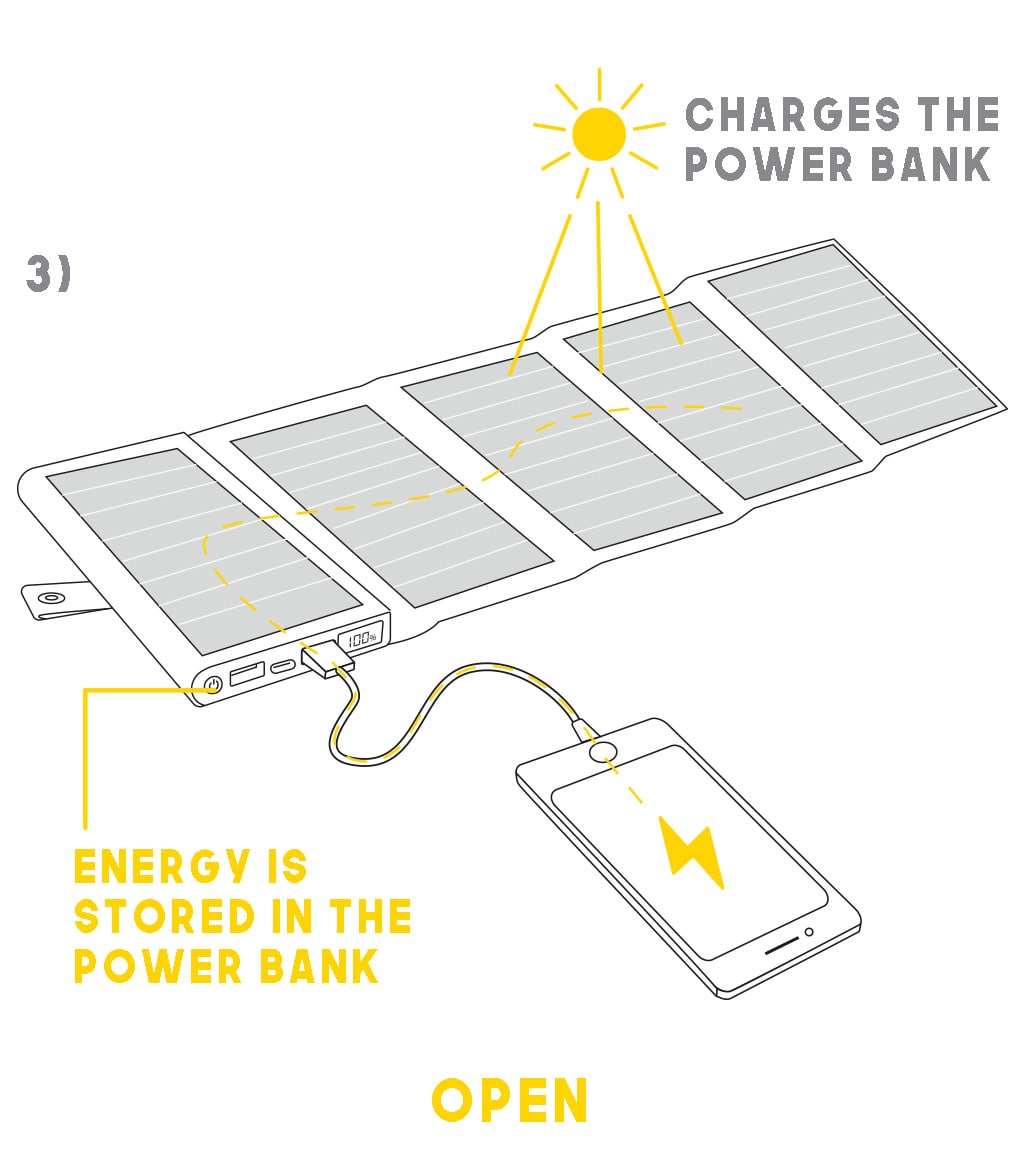
Because traditional power banks and direct-charging solar panels each have their own limitations, manufacturers have created hybrid solar power banks that merge the two technologies into one device.
These gadgets come equipped with built-in solar panels that are connected to a battery for storage, so you can collect solar energy during the day and charge your devices from the battery whenever you want. This dual approach solves the main problems of each individual method, offering the dependability of stored power and the renewable energy production of solar technology.
“Portable Solar Charger …” from sunslice-solar.com and used with no modifications.
Check Current PricesWhy Have to Choose Between Portable Solar Chargers vs Power Banks – The Advantages of Hybrid Systems
Portable solar chargers can slowly charge their internal batteries throughout the day, even when you’re on the go. The built-in design means there are fewer parts to carry and keep track of than if you were to have separate solar panels and power banks.
Most models allow for the internal battery to be charged by solar power while also powering devices from the stored energy, effectively extending the usable capacity beyond what the battery alone could provide.
For people who travel or enjoy outdoor activities, this practical compromise often represents the most versatile solution despite some compromises in both solar efficiency and battery capacity compared to devices that are dedicated to a single purpose.
However, this combination does come with some drawbacks. Solar panels built into power bank cases typically offer lower wattage (2-5W) than dedicated panels, which means they charge very slowly.
The small size of these devices limits the size of the solar panel and, therefore, the amount of power it can generate. This makes the solar input more of a supplement to the main power source rather than the primary source for charging the internal battery.
Despite these limitations, the convenience of having everything in one device is making these hybrid devices increasingly popular for casual outdoor use and emergency preparedness.
The Best Solar Power Banks on the Market
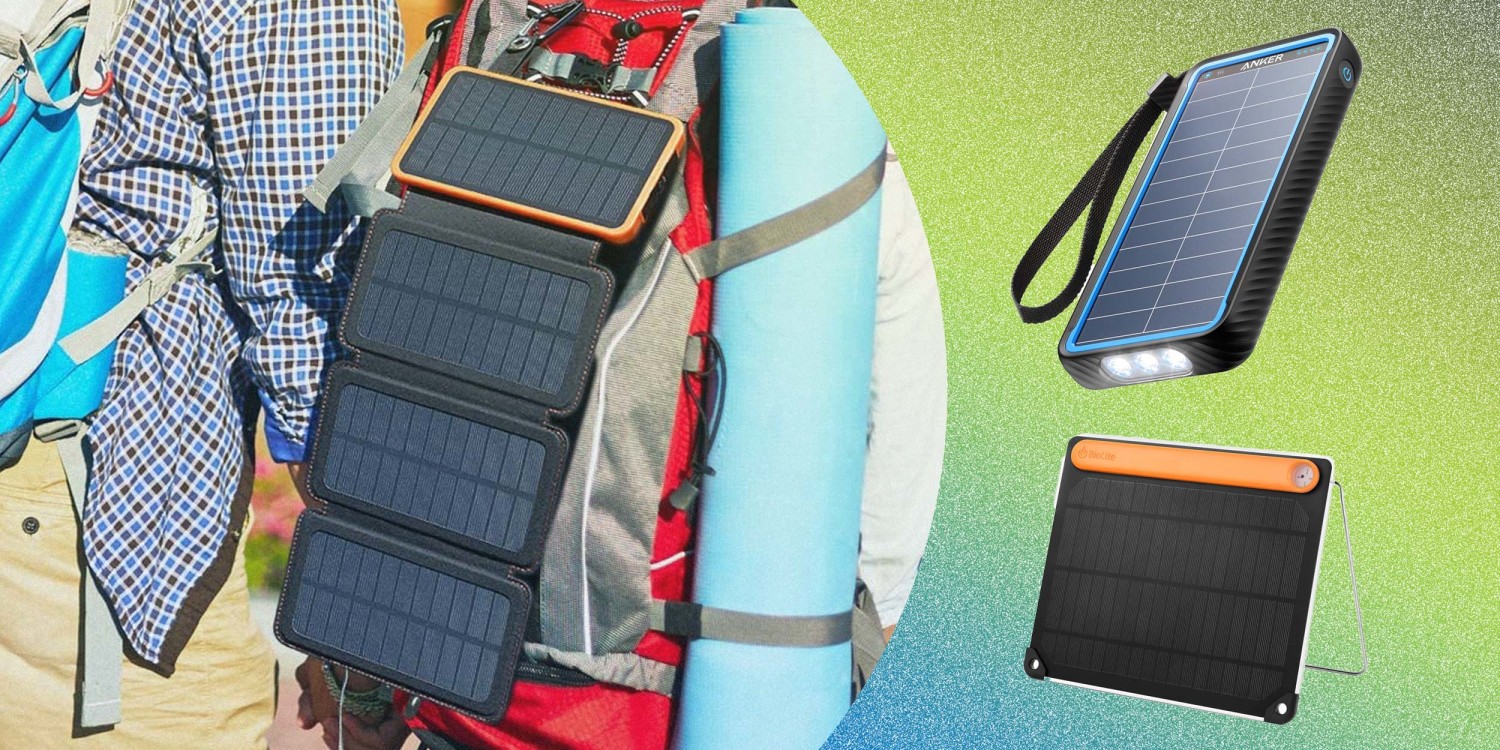
There’s a wide range of quality, performance, and durability in the solar power bank market. The best models stand out by having solar cells that are more efficient, construction that can withstand the weather, and marketing claims about solar recharging capabilities that are accurate.
You should look for devices that have solar panels in the 5W+ range if you want a meaningful contribution from solar, lithium polymer batteries that are of good quality and have actual capacities of 10,000-20,000mAh, and construction that’s rugged and suitable for outdoor use.
Features like having multiple USB outputs, lighting that’s integrated, and capabilities for wireless charging add versatility for different scenarios in which the device might be used.
Top-tier models from well-known outdoor and electronic accessory brands usually provide more reliable performance than cheaper alternatives, especially in terms of solar charging efficiency and battery quality.
While they may be more expensive at first, their longer lifespan and more reliable performance often represent better value over time for serious outdoor enthusiasts. For occasional use or emergency backup purposes, mid-range options provide a reasonable balance of performance and affordability.
What to Expect from Solar Hybrid Performance
Understanding the performance of solar power banks can help prevent disappointment when using them. The solar panels on most power banks are designed to provide supplemental power, not to fully charge the battery.
For example, a typical 10,000mAh solar power bank with a 2-3W panel might only gain 20-30% of its battery capacity from a full day of optimal sunlight. This is enough to extend the life of your power bank, but not enough to replace charging it from a wall outlet.
Therefore, it’s best to think of the solar capability as a way to extend the range of your power bank, not as a replacement for traditional charging, especially for power banks with smaller integrated panels.
Price Comparison: Upfront Cost vs Long-Term Savings
When comparing power banks and solar chargers, it’s not just about the technical specs and performance features. The cost is also a major factor in the decision-making process. But the cost isn’t just about the price tag on the shelf.
You also have to consider how long it will last, how often you’ll have to replace it, and how much money it could save you on energy bills in the long run. By considering these long-term financial factors, you can make a purchase that fits your budget now and offers the best value for your money in the future.
Comparing Initial Costs
The initial cost of power banks and portable solar chargers varies greatly depending on the product category and quality. Basic power banks (5,000-10,000mAh) usually cost between $15-30, while high-capacity models (20,000mAh+) with additional features can cost between $40-80.
Entry-level portable solar chargers start at around $30-50 for small panels (5-10W), and larger or more efficient models can cost between $80-200+ depending on power output and build quality. Hybrid solar power banks generally fall somewhere in the middle, with prices typically ranging from $30-100 based on battery capacity and solar panel specifications. For those interested in eco-friendly options, consider checking out the best food recycle bins for the kitchen.
The price range is an indication of the quality and performance of the power bank or solar charger. Lower-priced power banks often use lower quality battery cells, have less accurate capacity ratings, and have shorter lifespans.
Inexpensive solar chargers often use less efficient solar cells and are made of lower durability materials, which means they degrade more quickly when used outdoors. The higher price for higher quality products usually means better performance consistency and a longer lifespan, which are factors to consider in addition to the initial price.
Longevity and Replacement Costs
When you take into account the lifespan of the product and how often it needs to be replaced, the total cost of ownership can vary significantly. A good power bank will usually last for 300-500 charging cycles before the battery starts to degrade and it needs to be replaced.
If you use it regularly, this usually equates to 2-3 years of use. Solar chargers, especially those without built-in batteries, can work effectively for 7-10+ years before their performance starts to degrade significantly. This means they offer a much longer lifespan for your initial investment. For more insights into durable materials, you might find this analysis of Cordura nylon interesting, as it highlights why certain materials are valued for their longevity.
When you consider the lifespan of these two devices, things get interesting. If you’re buying a $50 power bank every three years, you’re spending $150 over nine years. But if you buy a $150 solar charger, it could last that whole time. So if you’re someone who uses these devices often, and would otherwise be buying multiple power banks, it might be worth it to invest in a more expensive solar charger. Yes, the upfront cost is more, but it could save you money in the long run.
Considering the Environmental Impact
When you’re comparing the costs of both technologies, it’s important to consider the environmental impact as well as the financial outlay. Both solar chargers and power banks require resources to manufacture, consume energy, and create potential waste. However, solar chargers have a clear advantage in terms of their environmental impact during use. They generate clean energy, whereas power banks simply store energy that may have been generated using fossil fuels. This reduction in carbon footprint has a real economic value, even if it’s difficult for consumers to quantify it in financial terms.
Those who are environmentally aware may find that the sustainability benefit warrants a higher initial cost, even if a strict financial analysis might favor simpler options. The renewable energy aspect of solar chargers is an environmental investment that offers returns throughout the product’s lifespan in the form of lower carbon emissions compared to continually recharging power banks from non-renewable grid sources.
“4 solar power banks that are worth the buy” from www.nbcnews.com and used with no modifications.
Check Current PricesConclusion: Choosing the Right Power Source
The best portable charger for you depends on your personal usage habits, the environment in which you’ll be using it, and your own priorities. For city dwellers, weekend adventurers, and those who value convenience and reliability, traditional power banks are the simplest solution.
They’re compact, reliable, and predictable, making them perfect for short trips where ease of use is key. For longer outdoor trips, eco-friendly travelers, and those traveling to areas with limited power sources, solar chargers provide a level of sustainable power independence that no battery-only charger can offer.
- Choose a power bank if your trips are short (1-3 days), you value charging speed, or you need guaranteed performance regardless of weather
- Select a solar charger for extended outdoor adventures, environmental sustainability priorities, or travel to areas with unreliable electrical infrastructure
- Consider hybrid solar power banks for the best balance of reliability and sustainability, though with compromises in both solar efficiency and battery capacity
- For critical applications, pairing a dedicated solar panel with a separate power bank often delivers better performance than all-in-one solutions
- Remember that larger capacity and higher quality products typically deliver better value over time despite higher initial costs
Many experienced travelers eventually adopt a combined approach—using a high-quality power bank for reliable everyday charging while incorporating solar technology for extended trips or as environmental conditions allow. This flexibility ensures you’re prepared for varying scenarios without compromising on either convenience or sustainability. For a deeper understanding, you can explore this comparison of solar chargers and power banks.
Whether you’re trying to stay connected on a weekend camping trip or keep your essential devices powered during a long backcountry expedition, today’s portable charging solutions offer an unprecedented amount of power in increasingly small packages.
By choosing a power solution that fits your specific needs instead of opting for a one-size-fits-all approach, you can maximize both performance and value. For those interested in enhancing their outdoor experience, consider exploring these rain-proof treehouse design tips to ensure your setup is both functional and weather-resistant.
Common Queries About Portable Solar Chargers vs Power Banks
When looking at portable power solutions, it’s easy to get lost in the tech specs and marketing jargon. These common queries will help clear up any confusion and misconceptions, making it easier for you to choose the right charging solution and get the most out of it.
- How accurate are manufacturer capacity claims for power banks and solar chargers?
- What happens to solar chargers and power banks in extreme temperatures?
- Can portable chargers damage my devices with improper voltage or current?
- What maintenance does each technology require for optimal performance?
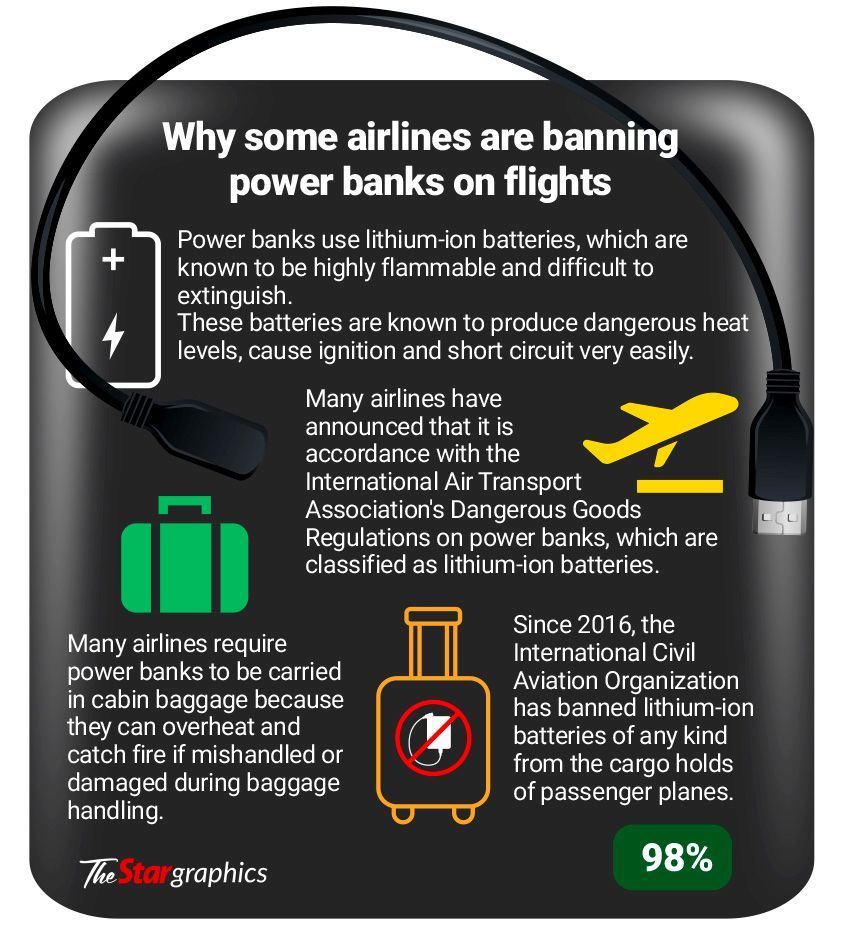
- Are there air travel restrictions for power banks or solar chargers?
Understanding these practical considerations helps set realistic expectations and ensures you select products that truly meet your needs rather than those that simply advertise the most impressive specifications. Let’s address some of the most common questions in more detail, such as the differences between a solar charger vs power bank.
“No power banks in bags | The Star” from www.thestar.com.my and used with no modifications.
Check Current PricesFor more specific requirements beyond these general questions, looking at manufacturer documentation or contacting companies with specific use case inquiries can provide valuable insights tailored to your specific situation. Most reputable manufacturers provide detailed technical support resources addressing common usage scenarios and troubleshooting guidance.
How much time does a solar power bank take to charge fully?
The charging time of solar power banks can vary greatly depending on the size of the solar panel, its efficiency, the weather conditions, and the battery capacity. A typical solar power bank with a capacity of 10,000mAh and small integrated panels (2-5W) takes about 25-50 hours of direct sunlight to charge fully, which means it needs several days of good sun exposure. Larger fold-out solar chargers (15-25W) connected to power banks of similar capacity might get fully charged in 5-10 hours of optimal sunlight. Keep in mind that these estimates can be greatly affected by cloud cover, the angle of the panel, the time of day, and seasonal variations, often making the actual charging times in real-world conditions two or three times longer.
Can I use a power bank to charge other devices while it is charging?
Pass-through charging, a feature found in most contemporary power banks, allows them to power other devices while they themselves are being charged from an external power source. This effectively transforms the power bank into a charging station, which can be especially handy for overnight charging of several devices from one outlet. However, it’s worth noting that pass-through charging produces extra heat and can lower charging efficiency and battery longevity if used often.
When you use the solar charging feature, power priority typically routes the available solar power to the devices connected first. Any excess power charges the internal battery. During conditions of limited sunlight, this might mean that your devices charge slowly while the power bank battery receives minimal charging. Check the manufacturer’s specifications because the implementation of this feature varies significantly between models.
“The 7 Best Portable Power Banks For …” from www.twobirdsbreakingfree.com and used with no modifications.
Check Current PricesHow long does a portable solar charger last on average?
Solar panels without built-in batteries usually retain 80-90% of their initial efficiency for 7-10 years of regular use before they begin to significantly decline in performance. High-quality models may last even longer with proper care. The main points of failure for portable solar chargers are usually physical damage to the connection ports, wire junctions, or the panels themselves, not the photovoltaic cells becoming less efficient. Waterproofing materials and flexible hinges on folding models may wear out faster than the solar components, especially if they are frequently exposed to harsh conditions.
Can solar chargers withstand water and weather conditions?
There is a wide range of weather resistance among solar charger models. High-end solar panels designed for outdoor use often have water resistance ratings from IPX4 to IPX7, meaning they can handle rain, splashes, and sometimes even brief submersion. On the other hand, cheaper models usually provide little weather protection, with junctions and electronics that are exposed and susceptible to damage from moisture. To ensure reliable performance in difficult conditions, look for products with specific IP (Ingress Protection) ratings rather than those that simply claim to be “weather-resistant.”
Even the models that are water-resistant have their limits, especially around connection ports and under harsh weather conditions. Many people use extra protection such as waterproof pouches or cases when the weather is bad, while still allowing the solar panels to be exposed to any available light. Keep in mind that water resistance can wear down over time due to exposure to UV rays and physical wear and tear, so checking and maintaining the seals and protective coverings regularly can help maintain this feature for the life of the product.
How can I figure out what size power bank I need?
To figure out the right size power bank, you need to know both the battery capacities of your devices and how many times you’ll need to recharge them before you’ll have access to a wall outlet. Start by finding out the battery capacities of your devices in milliampere-hours (mAh): smartphones are usually 3,000-5,000mAh, tablets are 7,000-10,000mAh, and laptops are 5,000-8,000mAh (though laptop batteries are often rated in watt-hours instead of mAh). Then think about how many full charges you’ll need for each device while you’re away. For more on this topic, you might want to check out our comparison of popular tech gadgets.
Remember to consider power conversion efficiency by increasing your total required capacity by about 1.3-1.5 to account for energy losses during charging. For instance, if you need two full charges for a 4,000mAh phone (8,000mAh in total), you should aim for a power bank with at least 10,400-12,000mAh capacity. For trips that last several days without access to recharging, it’s best to choose a higher capacity, while for shorter trips with predictable power needs, more compact lower-capacity options may be enough.
Keep in mind that the actual usable capacity is usually 60-70% of the advertised capacity due to voltage conversion, circuit inefficiencies, and battery discharge characteristics. This practical limitation makes it wise to slightly oversize your power bank for critical power needs.
If you’re looking for a green solution to portable power, look no further than EcoFlow’s groundbreaking solar charging solutions. They offer reliability and sustainable energy harvesting. Their advanced technology is at the forefront of renewable portable power, allowing you to stay connected while also reducing your environmental footprint.
Check Curent Prices