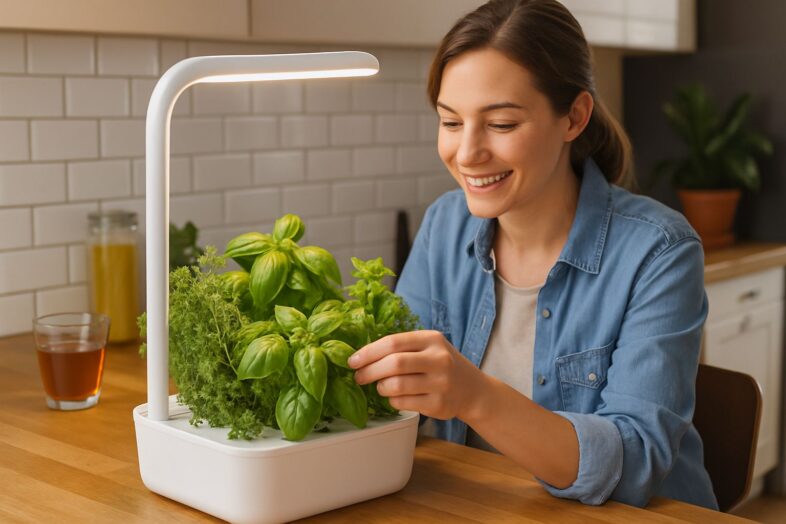
A few of our tips to maintain a thriving indoor hydroponic herb garden are to focus on consistent nutrient/pH management (pH 5.5-6.5), provide 14-16 hours of light with LEDs, and ensure good air circulation with fans. Read on for more tips like these!
Summary of the Article
- Hydroponic herb gardening allows you to grow plants without soil and harvest them all year round, as long as you maintain the system properly
- If you choose the right system for your space and the right herbs, you're much more likely to be successful
- The pH levels of your nutrient solutions should be between 5.5 and 6.5, and they should be properly balanced. This is very important for the health of your plants and the development of their flavors
- LED grow lights are the best choice for most culinary herbs. They should be placed 12-18 inches above the plants to give them the best light coverage
- Monitor your system every week and clean it regularly to prevent problems like nutrient deficiencies and algae growth
I used to struggle with gardening because of the limitations of the seasons and diseases in the soil. Then I started growing herbs hydroponically, and it changed everything. These water-based growing systems are clean, give you a lot of control, and let you harvest herbs all year round. If you're a busy professional who doesn't have a lot of time, or if you just like the idea of always having fresh herbs, hydroponic gardening is a great solution. It offers a lot of benefits that traditional soil methods don't.
Keeping an indoor hydroponic herb garden in tip-top shape might seem like a daunting task, but I've discovered that it's actually easier than traditional soil gardening once you get the hang of it. With no weeding to worry about, fewer pests to deal with, and precise nutrient delivery, your indoor herb garden can flourish with minimal fuss. Let's delve into how to keep your system ticking over for the best possible harvests and flavor.
1. Select the Perfect Hydroponic System for Your Home
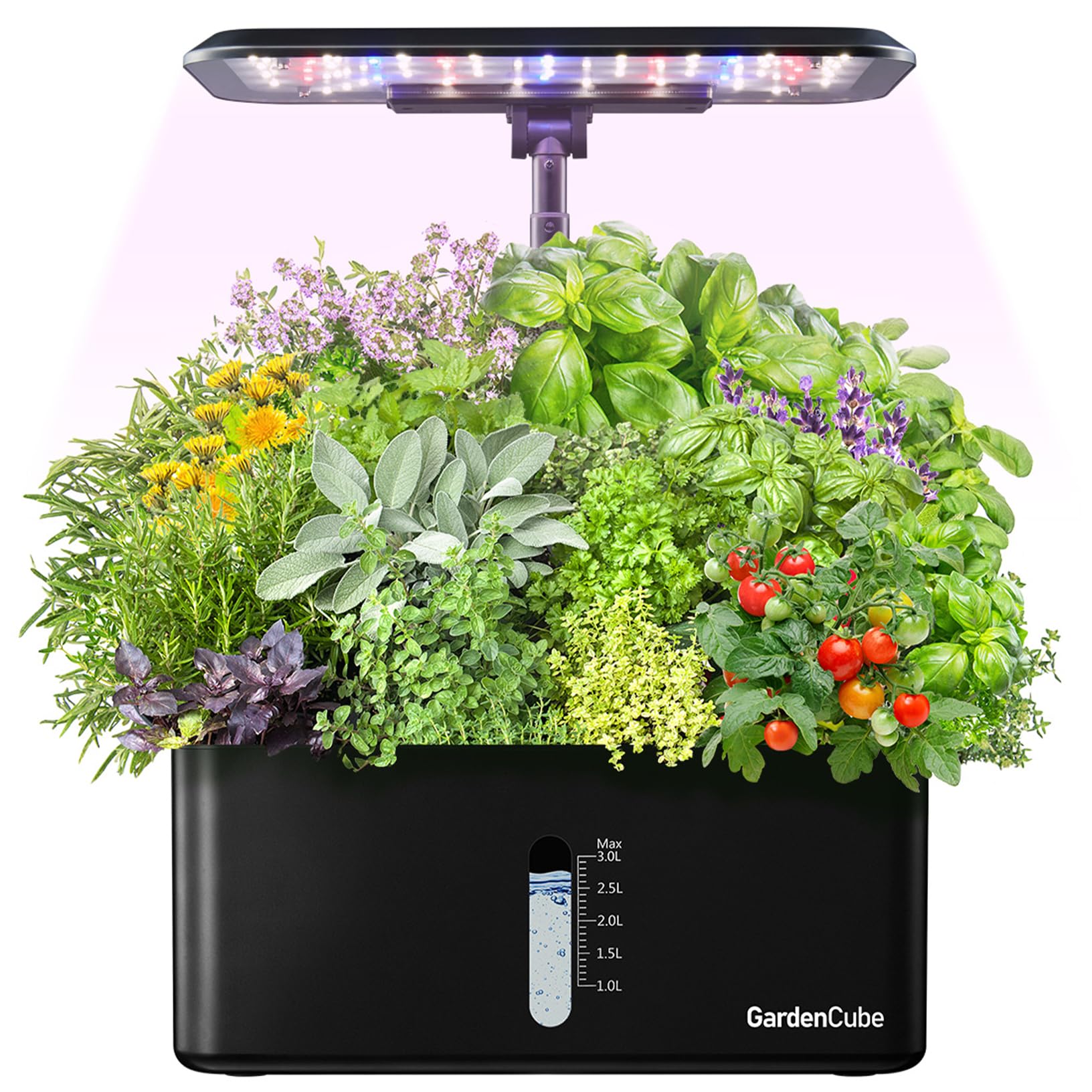
“Amazon.com: Hydroponics Growing System for a productive indoor hydroponic herb garden…” from www.amazon.com and used with no modifications.
Check Current PriceStarting a thriving indoor hydroponic herb garden begins with picking the perfect system for your unique living conditions. My personal experience has taught me that the best system is a balance of the space you have available, your budget, and how involved you want to be with the upkeep. The system you choose will determine how much time you need to devote to your garden and how much you can grow.
Getting Started with Deep Water Culture Systems
For those who are new to hydroponics, Deep Water Culture (DWC) systems are a great way to get your feet wet. In these systems, the roots of your plants are submerged in nutrient-rich water, and air stones are used to ensure they get the oxygen they need.
I've found that DWC indoor hydroponic herb garden systems work really well for herbs like basil and mint that thrive in consistently moist conditions. One of the best things about DWC is its simplicity—there are fewer parts to worry about, so maintenance is a breeze, and you can usually get by with checking on things once a week.
Using Nutrient Film Technique to Save Space
If you're short on counter space, consider using a Nutrient Film Technique (NFT) system. These systems grow herbs vertically, which means you can grow more herbs in less space. An indoor hydroponic herb garden system works by circulating a thin layer of nutrient solution over the roots in a channel.
I've found that leafy herbs like cilantro and parsley grow particularly well in NFT systems. To maintain the system, you just need to make sure the channels aren't clogged and the flow rate is consistent. This usually only takes a few minutes each week.
Using Ebb and Flow Systems for a Variety of Herbs
If you're like me and you want to grow a variety of herbs in your indoor hydroponic herb garden, some of which have different needs, Ebb and Flow (also known as flood and drain) systems are your best bet. These systems work by temporarily flooding the growing media with nutrient solution, then draining it back into a reservoir.
This creates the wet-dry cycles that many herbs prefer, especially Mediterranean herbs like rosemary and thyme. As far as maintenance goes, you'll need to regularly check the flooding mechanism and make sure the timer is accurate, but it only takes about 15-20 minutes a week.
For more tips on maintaining your hydroponic system, check out these tips for hydroponic plants.
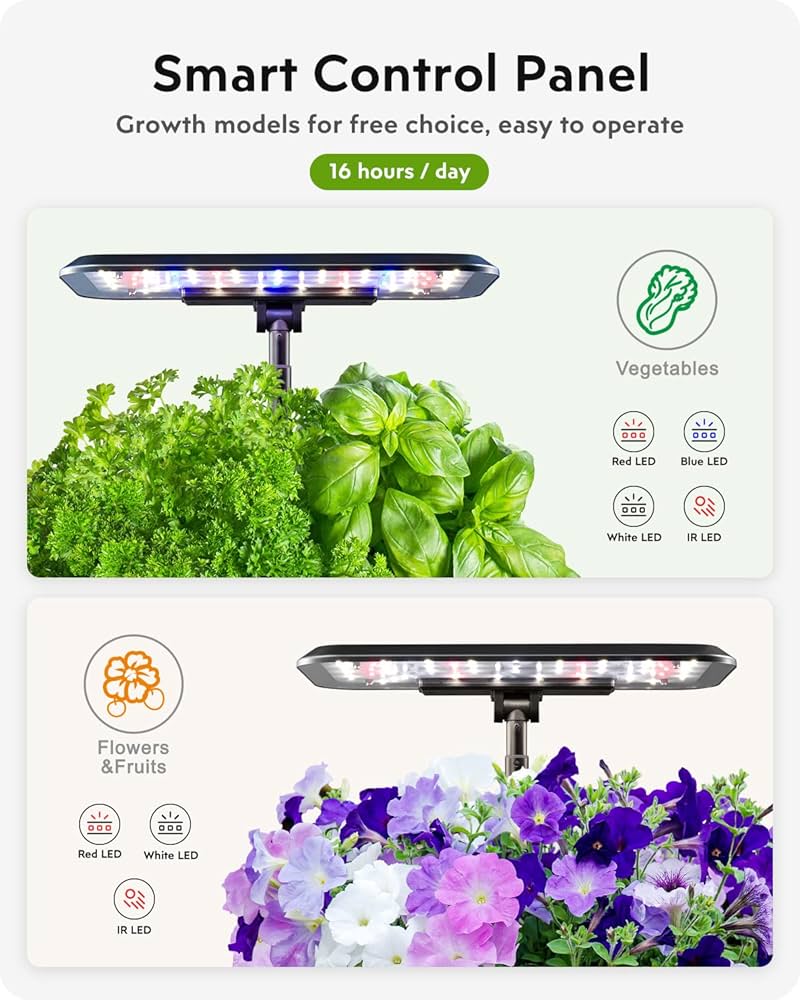
“Amazon.com: Hydroponics Growing System …” from www.amazon.com and used with no modifications.
Check Current Price2. Choose Herbs That Do Well in Hydroponic Settings
Not every herb is going to do well in an indoor hydroponic herb garden system. I've tried dozens and dozens of varieties and have found that picking the right plants from the get-go can save you a lot of maintenance headaches and improve the quality of your harvest.
The herbs that do well in hydroponic systems tend to have adaptable root systems and relatively fast growth cycles. For those interested in sustainability, you might also want to consider using food recycle bins to complement your indoor gardening efforts.
Quickly Maturing Herbs (Basil, Cilantro, Mint)
My hydroponic heroes are basil, cilantro, and mint because they grow quickly and are very forgiving. You can start harvesting leaves from these herbs within 3-4 weeks of planting them, and they will keep producing for months if you take care of them.
I've noticed that these quick growers need their nutrient solution changed more often (every 7-10 days) and benefit from being pruned every week to stop them from growing too tall. They react quickly to changes in their environment, which makes them a great way to see how healthy your indoor hydroponic herb garden system is.
Middle-of-the-Road Herbs (Parsley, Chives, Dill)
Parsley, chives, and dill are fantastic options for those looking for consistent, reliable growth with a moderate level of maintenance. These herbs tend to take a little longer to get established, but once they do, they produce steadily.
From what I’ve seen, they don’t need their nutrients changed as often (every 10-14 days), and they do better with a slightly lower concentration of nutrients than the herbs that grow more quickly.
Their steady growth makes them a great choice for mixed herb systems.
Hard Work Pays Off (Rosemary, Thyme, Oregano)
Herbs from the Mediterranean, such as rosemary, thyme, and oregano, can be a bit tricky to grow in a hydroponic system, but they offer an amazing taste when properly cared for. These herbs are used to drier conditions, so if they're always wet, they can get root rot.
I've been able to grow them successfully in my indoor hydroponic herb garden by using a growing medium that drains really well and by letting them dry out a bit longer between waterings.
These herbs also need careful nutrient management—I use about 25% less concentration than I do for leafy herbs and I keep the pH a little higher (6.0-6.5).
Although more challenging, these fragrant herbs yield essential oils at levels seldom matched in soil gardens when their unique requirements are satisfied. Their upkeep routine includes more diligent monitoring of hydration levels and periodic root checks to ensure healthy growth. The additional care results in extraordinarily strong flavors that turn regular meals into gourmet experiences. For those interested in enhancing their culinary skills, exploring unique luxury gift ideas could provide inspiration for gourmet cooking experiences.
3. Master Your Nutrient Solution
The most crucial maintenance task for a thriving hydroponics garden is getting your nutrient solution just right. Unlike traditional soil gardens where plants can forage for nutrients, hydroponic herbs are entirely dependent on the nutrients you provide in their water reservoir.
By nailing the nutrient balance, you can prevent most common issues before they even begin.
The Macronutrients Your Herbs Need to Thrive
Your indoor hydroponic herb garden will need nitrogen, phosphorus, and potassium to flourish. I've found that for leafy herbs, solutions with higher nitrogen ratios (like 3-1-2) are best for promoting the growth of lush foliage.
The best way to ensure the right nutrient strength is to measure your solution's electrical conductivity (EC). For most culinary herbs, I aim for 1.0-1.2 mS/cm. Regular testing and adjustment (usually weekly) will help your plants get the consistent nutrition they need without dangerous buildups or deficiencies.
Creating Flavor with Micronutrients
How do you get your herbs to taste so good? The answer is micronutrients. Things like magnesium, calcium, and sulfur are crucial to developing the aromatic compounds that give herbs their unique flavors.
I've found that using a hydroponic nutrient formula specifically designed for herbs is much more effective than using a general-purpose formula.
Checking your plants once a week for signs of a micronutrient deficiency, like strange leaf patterns or discoloration, can help you make any necessary changes before the flavor of your herbs is affected.
Optimizing pH Levels for Nutrient Absorption
Ensuring the correct pH is the most vital and often neglected part of managing nutrient solution. Even with the perfect amount of nutrients, herbs can't use them if the pH is too high or too low.
I keep the pH in my indoor hydroponic herb garden, for most herbs, between 5.5 and 6.5, checking at least twice a week with a reliable digital pH meter.
If you need to adjust the pH, do it slowly using a pH up or down solution. Don't change it more than 0.5 at a time to avoid shocking your plants.
“Best Hydroponic Growing Kits & Systems” from www.amazon.com and used with no modifications.
Check Current Price4. Get the Hang of Your Lighting Needs
With indoor hydroponics, you need to carefully consider your lighting approach because you're taking over from the sun's flawless spectrum.
The way you set up your lights has a direct impact on how quickly your herbs grow, how they taste, and even their nutritional value. In my experience, indoor hydroponic herb garden lighting is usually the thing that needs the most adjustment in a new setup, but once you've got it right, it doesn't need much looking after.
Lighting Requirements for Various Herbs
Most kitchen herbs flourish with 14-16 hours of light each day during their vegetative growth phase. In my experience, basil, cilantro, and dill especially benefit from the longer end of this range, while rosemary and thyme can get by with a bit less. Using timers to automate your lighting schedule can take one maintenance task off your plate and ensure consistency. You may need to adjust for the seasons—I often cut back lighting periods by 1-2 hours during the summer months when the plants are also getting some ambient light.
LED or Fluorescent: Which is Better?
Having tried out a number of lighting systems, I can confidently say that LED grow lights are the best for herb gardens. The latest LED fixtures give off exactly the right light spectrum to encourage tight growth and essential oil production, and they use less electricity.
Even though they cost more upfront than fluorescent options, the fact that they don’t give off much heat and last a long time means you won’t have to do much to maintain them for years.
I've discovered that herbs grown under high-quality LEDs have a more complex flavor and require less pruning to keep them in the ideal shape. Fluorescent lights, such as T5 high-output fixtures, are great for seedlings and herbs that don't need much light, but you'll need to replace the bulbs every six to twelve months as the quality of the spectrum decreases.
- Benefits of LED: Energy saving, targeted spectrum, low heat, lasts 3-5 years
- Benefits of Fluorescent: Lower upfront cost, good spectrum for seedlings, readily available
- Maintenance considerations: LEDs need occasional dusting, fluorescents require regular bulb rotation and replacement
No matter which system you go with, I suggest incorporating some blue spectrum light (for dense growth) and red spectrum light (for flavor enhancement). The ideal balance for most herbs is around a 3000-4000K color temperature with added red light during the mature growth stage. For more detailed tips on maintaining your indoor hydroponic herb garden, check out this guide on growing an indoor herb garden.
Keeping Lights in the Right Spot to Avoid Spindly Plants
One of the easiest and most crucial tasks in maintaining your indoor garden is correctly positioning your lights. I keep my lights 12-18 inches above my herbs and move them up as the plants get taller.
This distance gives the right amount of light without causing heat stress or light bleaching. Adjusting the height of the lights every week keeps up with the growth of the plants and prevents them from looking stretched and spindly, which can happen if they don't get enough light.
5. Keep an Eye on Your Water's Quality and Temperature
Water is the lifeblood of your indoor hydroponic herb garden system, so its quality and temperature are crucial to keep in check. In my experience, water-related problems account for about 80% of the issues new hydroponic gardeners run into, from underdeveloped growth to total crop loss.
Regularly checking and tweaking these factors can nip most potential problems in the bud before they impact your herbs. For those interested in maintaining a healthy indoor environment, consider exploring this setup guide for cleaner air to complement your hydroponic efforts.
Keep Water Temperature Between 65-75°F
Keeping the water temperature between 65-75°F (18-24°C) is the sweet spot for nutrient absorption and discourages the growth of pathogens. I use a basic fish tank thermometer to check the temperature every day, especially during the changing of the seasons when the temperature can change a lot.
If you find your water reservoir getting hotter than 75°F during the summer, think about simple solutions like wrapping the reservoir in reflective insulation or adding frozen water bottles to the nutrient solution during the hottest part of the day.
On the other hand, heating mats that are used for seedling propagation can be put under the reservoirs during the winter to keep the temperature from getting too low.
Stop Algae Before It Starts
Algae loves the same conditions as your herbs: nutrient-rich water and plenty of light. I've found that if you cover all water surfaces with materials that block light, you can significantly reduce algae growth.
Use dark reservoir covers, black tubing, and cover any exposed growing media with black-and-white poly film (white side up). This is a simple way to get rid of the light that algae needs to grow, without affecting the growth of your herbs.
If you're having a hard time with stubborn algae, try doing a hydrogen peroxide treatment every week. Using food-grade hydrogen peroxide at a rate of 2-3 ml per gallon of nutrient solution can get rid of any existing algae, and it won't harm your herbs.
After 24 hours, the peroxide will have turned into water and oxygen, leaving no harmful residue and giving your plants' roots a helpful boost of oxygen. For more information on sustainable indoor hydroponic herb garden practices, consider checking out the best food recycle bins for the kitchen to complement your eco-friendly gardening efforts.
Knowing When to Switch Out Your Nutrient Solution
One of the key regular maintenance tasks you'll need to perform in hydroponic gardening is completely changing out your nutrient solution. I personally do this every 10-14 days for my leafy herbs, regardless of how the solution looks.
This is because there can be nutrient imbalances that you can't see, as plants will absorb certain elements more than others, leaving the unabsorbed ones to build up. If it's the summer or a time of rapid growth, I'll up the frequency to once a week since the plants will be absorbing nutrients at a faster rate.
Keep an eye on your solution's electrical conductivity (EC) between full changes, and top it off with plain water if the levels get too high. If the EC drops a lot, add a bit of nutrient concentrate to keep it at the right level.
By doing these simple maintenance tasks, you can avoid the most common reason hydroponic gardens fail, which is an imbalance in the nutrient solution.
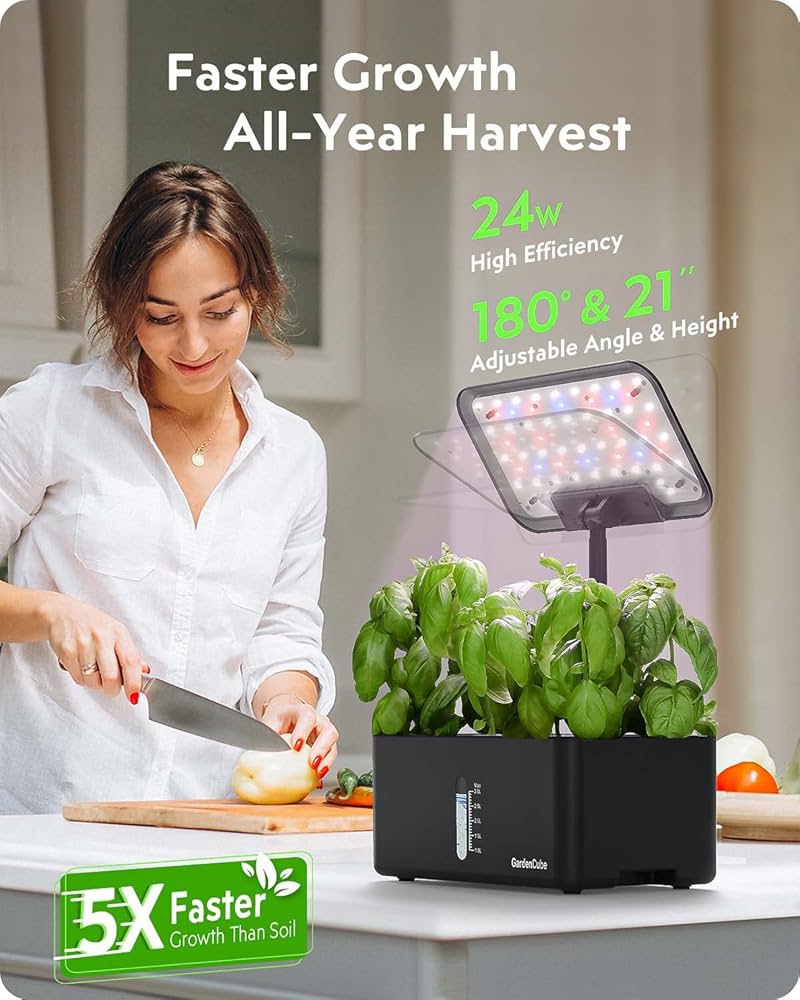
“Hydroponics Growing System Indoor …” from www.amazon.com and used with no modifications.
Check Current Price6. Regularly Check and Tweak Your System
Regular check-ups are the backbone of maintaining a healthy hydroponic system. I like to set aside 15 minutes each Sunday morning to check on key system measures and make any needed changes. This habit helps me catch potential problems before they get out of hand, ensuring that my herb garden keeps producing without interruption.
Basic Tools for Indoor Hydroponics
At a minimum, you should have a digital pH meter, EC/TDS meter, and thermometer in your hydroponics toolkit. I've discovered that it's worth it to spend a little more on these tools because they'll give you accurate readings and last a long time.
I check each parameter once a week and write down the results in a notebook so I can see how they change over time. This information is really helpful when something goes wrong with your plants or you're trying to get the best results with a particular type of herb.
Aside from digital aids, a good old-fashioned look-over is just as crucial. I make sure to check out the roots every week to see how they're growing and what color they are—healthy hydroponic roots should be white or cream and have lots of branches.
If the roots are yellow, brown, or slimy, that's a sign that something's not right and needs to be dealt with straight away.
It's also a good idea to keep an eye on the leaves in your indoor hydroponic herb garden for any strange spots, curls, or changes in color, as these can be early signs that the nutrients aren't balanced or there's something in the environment causing stress.
How to Tell if Your Plants Need a Change in Nutrients
Being able to understand what your plants are trying to tell you can make maintaining your hydroponic garden a whole lot easier. If you notice that new growth is coming in a pale yellow color, this usually means that your plants are lacking in nitrogen.
On the other hand, if you see purple stems or the undersides of leaves, this is often a sign that your plants are not getting enough phosphorus. If the edges of the leaves are curled or the tips of the leaves are turning brown, this often indicates that there are pH problems that are preventing the plants from absorbing nutrients, rather than a lack of nutrients themselves.
My own method for tweaking nutrient levels is straightforward: make little changes and wait for 3-5 days to see what happens before making any more changes.
This slow and steady method helps to avoid the overcorrection cycle that often leads to problems in hydroponic gardening. When you're adjusting the concentration of nutrients, don't change it by more than 0.2 EC units at a time; when you're adjusting the pH, don't change it by more than 0.2-0.3 units at a time so as not to shock the delicate root systems.
7. Trim to Maximize Growth and Taste
Thoughtful trimming can turn a good herb yield into a great one, all while keeping your plants healthy. Unlike traditional soil gardening where trimming is mostly about shaping the plants, trimming in hydroponic gardening can directly affect the taste of the herbs and their ongoing growth.
I make trimming a part of my weekly care routine to keep my plants growing at their best.
How to Get Bushier Growth with Pinching
I find that pinching the growing tips of herbs such as basil, mint, and sage regularly encourages the plant to grow more points instead of just one tall stem. I pinch above the leaf nodes (where the leaves come out of the stems) to encourage the plant to branch out at that point.
For most herbs, I start pinching when the plants have grown their third set of true leaves and continue throughout their productive life. This simple technique, which only takes a few seconds per plant, can turn lanky, sparse herbs into compact, bushy producers that yield a lot more usable leaves.
Especially with basil, I've noticed that nipping flower buds in the bud as soon as they show up helps keep the leaves flavorful and tender.
Flowering is a sign that a plant is done being productive, so if you regularly prevent this natural process from happening, you can keep harvesting for weeks or even months longer.
For more tips on sustainable gardening, check out the best food recycling bins for the kitchen.
Prune to Promote Growth
Hydroponic herbs are surprisingly receptive to a prune-as-you-grow approach. Instead of waiting for plants to mature before pruning, I consistently remove about a quarter to a third of the plant's overall growth, focusing on the oldest leaves and stems. This regular pruning method sends a message to the plant to generate new growth swiftly, leading to a larger overall yield over the plant's lifespan.
For leafy herbs such as cilantro and parsley, I prefer to snip off the entire stem rather than plucking off individual leaves. This method not only reduces plant stress but also promotes vigorous regrowth from the base.
For woody herbs like rosemary and thyme, I only harvest the soft new growth at the stem tips and leave the woodier sections to support future growth. These harvesting methods become part of your regular maintenance routine, providing fresh herbs for your kitchen while keeping your plants at peak productivity at the same time.
Handling Flowering Herbs
Even with your best care, most herbs will eventually try to flower, especially during periods of longer daylight. For leaf herbs like basil and cilantro, flowering significantly changes the flavor and texture, usually not in a good way.
I promptly remove flower buds from these herbs as part of routine care. For herbs primarily in an indoor hydroponic herb garden that are grown for their seeds, like dill and coriander, I let some stems flower while continuing to harvest others for leaf production, effectively getting two crops from the same plant.
When a plant is overly focused on flowering despite frequent pruning, I tend to take large cuttings for propagation and start the plant over from these cuttings.
This strategy leverages the great propagation environment of hydroponics to keep the production going without any loss of flavor. It's a great example of maintenance that enhances the performance of your garden.
8. Take Care of Your Hydroponic Garden
Being proactive in maintaining your hydroponic garden can prevent many problems from occurring. However, even if you take good care of your garden, problems can still arise. If you catch these problems early, you can turn a potential disaster into a minor hiccup.
I've developed a method for dealing with problems that focuses on finding the root cause, rather than just dealing with the symptoms. This way, you can find a permanent solution, rather than just a temporary fix.
Spotting Nutrient Deficiencies and Toxicities
One of the trickiest parts of hydroponics is telling the difference between not enough and too much of a nutrient. In my experience, deficiencies usually show up in new growth first, while toxicities tend to hit older leaves first.
Regular system maintenance, especially timely complete nutrient solution changes, can prevent most toxicity problems before they start. If symptoms show up despite regular maintenance, I usually check and adjust pH first instead of just adding more nutrients. If the pH is off, it can block nutrient uptake even if there's plenty of nutrients in your solution.
When I find that my herbs are struggling to absorb nutrients, I sometimes give my system a “reset.” I do this by running plain water with a root supplement through the system for 24 hours before adding a new nutrient solution.
This helps to flush out any salts that have built up in the root zone and growing media, essentially giving your system a clean slate without causing stress to your plants. For a comprehensive guide on maintaining clean air in your home, check out our smart home air purifiers setup guide.
Natural Pest Control Methods
While indoor hydroponic herb garden systems generally have fewer issues with pests than traditional soil gardens, they're not completely pest-free. I've made inspecting for pests part of my weekly maintenance routine, focusing on the undersides of leaves and where the stem joints are, as these are common areas for pests to start colonies.
If I do find a minor infestation of a common pest like aphids or spider mites, I use a simple spray made from 1 tablespoon of neem oil and a few drops of dish soap in a quart of water, and I make sure to spray all plant surfaces.
- For fungus gnats: Add a layer of food-grade diatomaceous earth on top of any exposed growing media
- For aphids: Introduce beneficial ladybugs to indoor gardens with good containment
- For spider mites: Increase humidity and apply neem oil treatments weekly
- For whiteflies: Use yellow sticky traps near plants and spray with insecticidal soap
I view pest management as preventive maintenance rather than emergency response. Regular system cleaning, good air circulation, and appropriate humidity levels prevent most pest issues before they start, making this aspect of maintenance relatively simple compared to soil gardening.
Addressing Root Rot and Mold Concerns
The most significant issues when maintaining a hydroponic garden are root zone problems. I make sure to check the health of the roots every week by lifting the net pots or opening the access points of the system to check for discoloration or slime, which are signs of potential issues.
Healthy roots should be white or cream-colored and have a lot of branching. If the roots are brown, slimy, or have a bad smell, it could mean that there are pythium or other root pathogens present, which need to be addressed immediately.
If you notice minor root problems, try increasing the oxygenation by adding another air stone to the reservoir or by increasing the flow rate in circulating systems. You can also add beneficial bacteria products that contain strains of Bacillus subtilis, which naturally suppress harmful organisms.
If the problem is more severe, clean the entire system, treat with food-grade hydrogen peroxide (3ml per gallon), and replace the old nutrient solution with a fresh one. For more tips on maintaining healthy hydroponic systems, check out these 6 tips to grow amazing hydroponic plants. If you catch the problem early, this maintenance routine usually resolves root issues within a week.
- Preventative Measure: Keep water temperatures under 72°F (22°C)
- Preventative Measure: Make sure there's enough oxygenation via air stones or water movement
- Solution: Include beneficial bacteria products when you change the solution regularly
- Solution: Take out plants that are severely affected to stop them from spreading to healthy plants
Regularly scheduled maintenance of your system is the best way to avoid root problems. Most issues can be prevented before pathogens have a chance to take hold if you regularly clean, change the solution, and monitor the environment.
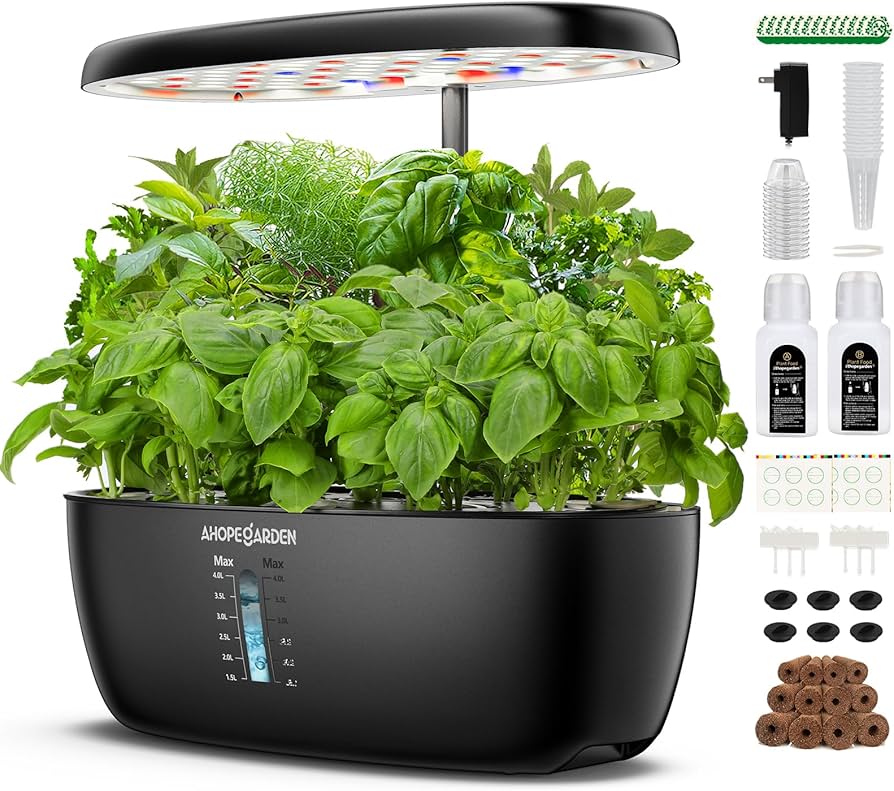
“Ahopegarden Indoor Garden Hydroponics …” from www.amazon.com and used with no modifications.
Check Current Price9. Keep Your System Clean
Keeping your system clean directly affects the health of your plants, the availability of nutrients, and how much maintenance you will need to do. I've found that setting up a regular cleaning schedule can really cut down on unexpected problems and make both your equipment and your plants last longer. Clean systems just work better and need less troubleshooting and adjustment over time. For effective maintenance, consider using food recycle bins to manage waste efficiently.
Weekly Cleaning Routine
Every week, when I change the solution, I wipe down any surfaces I can reach with a clean microfiber cloth. This helps to remove salt buildups, algae, and organic debris. I pay special attention to water lines at the reservoir surface where biofilms often develop.
This simple maintenance step prevents the buildup of materials that can harbor pathogens or block pumps and irrigation lines. For those interested in maintaining a clean environment, you might find this setup guide for cleaner air useful.
When it comes to systems that use pumps or drip emitters, I make sure to look for any blockages or unusual flow during my weekly upkeep. It only takes a few minutes to remove and clean the pump pre-filters or clean the emitters, but it can prevent system failures that could ruin your garden quickly.
I always keep a few extra parts on hand, especially extra emitters and airstones, so I can replace any that show signs of blockage or wear before they completely break.
My Monthly Deep Clean Routine
Every month, I like to give my hydroponic system a good deep clean, even if my plants look perfectly healthy. This includes taking apart and cleaning the pumps, checking and cleaning all of the fittings and connections, and looking over the growing media to make sure it's not decomposing or getting too compact.
If I'm using growing media like expanded clay pellets or rock wool, I give them a gentle rinse with clean water to get rid of any built-up salts before I put them back in the system.
Every month when I'm doing my maintenance, I also recalibrate my testing equipment using fresh calibration solutions. pH meters in particular have a tendency to drift over time, and recalibrating them monthly ensures that I'm getting accurate readings when I'm making the critical pH adjustments that my system needs.
This attention to the accuracy of my testing is an often-overlooked part of system maintenance of indoor hydroponic herb gardens that can prevent mysterious growth problems that are caused by incorrect measurements.
Cleaning Products Safe for Edible Plants
I make sure to use only cleaning products that are safe for food production in my hydroponic systems, so I know my harvest is safe. For most cleaning jobs, I use plain white vinegar diluted to one part vinegar to four parts water.
It does a great job of removing mineral deposits and light biofilms, and it doesn’t leave any harmful residues behind. When I’m cleaning my systems between plantings, I use food-grade hydrogen peroxide (3% solution) at a rate of three tablespoons per gallon of clean water to sanitize all surfaces.
Don't ever use bleach, household cleaners, or antibacterial products in hydroponic systems. Even if you rinse well after using these products, they can leave residues that are harmful to beneficial microorganisms and could potentially affect the health of your plants.
The great thing about properly maintaining a hydroponic system is that it doesn't often require aggressive cleaning agents. Regularly paying attention to the system with gentle cleaning methods will prevent the buildup of issues that might otherwise require stronger cleaning methods.
10. Don't Forget About Air Circulation and Humidity
It's easy to forget about the air quality when you're focused on water and nutrients, but it's just as important to the health of your hydroponic herbs. I've learned through trial and error that the right amount of airflow and humidity can help prevent disease, strengthen the stems of your plants, and even increase the production of essential oils, which makes your herbs taste even better.
The best part? It doesn't take much in the way of equipment to get these benefits. For instance, using best food recycle bins can help manage waste and maintain a clean environment for your indoor garden.
Bad air flow can create small areas of high moisture around the leaves where fungus can grow. Even if everything else in your system is perfect, this one thing can make your herbs less healthy and productive. I make sure to check the air quality every week when I do my other maintenance, and adjust it if I need to based on how the plants look and how they're growing.
Perfect Humidity Levels for Different Herbs
Various herbs flourish at various humidity levels, making this a crucial part of maintenance for mixed gardens. Herbs from the Mediterranean like rosemary, thyme, and oregano prefer drier conditions (40-50% humidity), while softer herbs like basil, cilantro, and mint perform better at moderate humidity (50-60%).
I use a cheap hygrometer to keep track of levels and adjust through ventilation or humidification as necessary.
Easy Ways to Improve Air Circulation in Your Indoor Garden
I keep the air flowing in my indoor garden with a small fan that clips onto the side of the garden. I position it so that it gently moves the air around the plants without blowing directly on any one plant.
This easy step helps to prevent humidity from building up around the leaves, strengthens the stems by providing a little resistance, and helps to distribute the heat evenly across the garden.
If you have a larger system, you may need to use more than one fan to make sure there are no pockets of stagnant air where humidity can build up.
Upgrade Your Indoor Herb Garden
Regular maintenance can turn a basic hydroponic garden into a top-notch culinary tool. I've spent years testing and fine-tuning these techniques to create a practical routine that won't take up all of your time.
By making these maintenance tasks part of your regular routine—checking in weekly, deep cleaning monthly, and observing daily—you'll start to understand your system and your plants better.
This knowledge will make you more confident and encourage you to experiment with new herbs and techniques, constantly improving your hydroponic skills.
Commonly Asked Questions About Indoor Hydroponic Herb Gardens
Having assisted many friends in setting up their first hydroponic herb gardens, I've noticed that certain questions about maintenance and troubleshooting come up time and time again.
These useful answers address the most frequently asked questions, with a focus on the preventative maintenance methods that produce the best results in the long run.
When should I switch out the water in my indoor hydroponic herb garden?
To ensure your herbs taste their best and grow healthily, completely replace your nutrient solution every 10-14 days. If your herbs are growing quickly or it's particularly hot, like in the summer, you may need to change the solution weekly.
In between full changes, check the EC/TDS levels every day. If the concentrations are high, add plain water. By doing this, you can avoid nutrient imbalances that can happen when plants absorb certain elements more than others.
Why are my indoor hydroponic herbs growing slowly even though I'm taking good care of them?
If your hydroponic herbs are growing slowly despite your best efforts, it's likely that the temperature is the culprit. The root zone temperature might be outside the 65-75°F (18-24°C) range, or the ambient temperature might be below 65°F (18°C). To figure out if temperature is the issue, check the water temperature in the morning and in the evening to see if there are any fluctuations that are outside the optimal range.
Other common reasons for slow growth include not enough light intensity (especially if you're using older fluorescent bulbs) or too much humidity, which can restrict transpiration. To fix the humidity issue, try adding a small circulation fan. This simple fix often resolves humidity-related growth problems in just a few days.
For a comprehensive guide on improving air quality, you might consider reading about smart home air purifiers to enhance your indoor environment.
Is it okay to use tap water in my hydroponic system or should I use filtered water?
In most cases, tap water is perfectly fine for use in hydroponic systems, although it can be beneficial to let it sit uncovered for 24 hours to allow any chlorine to dissipate before using it.
If your tap water has a total dissolved solids (TDS) count of over 200 ppm (something you can measure with an EC meter), it may be a good idea to dilute it with filtered or distilled water to avoid any mineral buildup in your system.
If you live in an area with very hard water, you might want to consider using a basic carbon filter to remove most of the elements that could cause problems while keeping the minerals that are beneficial.
Before I use a new water source in my established systems, I grow a few herb seedlings in the water with added nutrients for a week to test it. This simple test can reveal any potential problems before you expose your entire garden to a new water source.
Keep in mind that maintaining consistent water quality is a fundamental part of hydroponic maintenance—changing your water source often means you'll need to adjust your nutrient and pH management routines.
I always have a 5-gallon container of tap water on hand for when it's time to change the solution. This helps the chlorine naturally dissipate and the water reach room temperature, which prevents shock when you add it to your system during regular maintenance. For a comprehensive guide on maintaining air quality in your home, check out this smart home air purifiers setup guide.
How can I move my herbs from a soil garden to a hydroponic setup?
When you're ready to move your herbs from soil to a hydroponic system, carefully rinse all of the soil off the roots under lukewarm running water. Cut off about a third of the leaves to decrease the amount of water the plant needs while it adjusts to its new home.
Put the plant in your hydroponic system with a nutrient solution that's only half as strong as usual for the first week. After that, slowly increase the strength of the nutrient solution to full strength over the next week.
This slow and steady change will decrease the shock of transplanting while allowing the roots to grow structures that are better suited to a water environment instead of a soil environment.
Are my hydroponic herbs safe to eat when using nutrient solutions?
Hydroponic nutrients from trusted commercial manufacturers are designed specifically for food crops, and the herbs they produce are completely safe to eat when used according to the instructions. To be extra sure, simply rinse your harvested herbs under clean water before you use them.
The nutrients become part of the plant tissue through natural metabolic processes, just like they would in soil, making the end product no different from herbs grown in soil, except they are often cleaner and have a more intense flavor.
I keep my harvest safe by being meticulous about system maintenance. I only use food-grade hydrogen peroxide or vinegar for cleaning and I never use conventional pesticides.
I also make sure to harvest at least 24 hours after any system interventions like pH adjustment. These simple precautions will help ensure that your hydroponic herbs are the safest possible option for your culinary creations.
- Regularly Check the pH Levels
One of the most important tips for maintaining an indoor hydroponic herb garden is to regularly check the pH levels of your water. If the pH level is too high or too low, it can prevent your plants from absorbing the nutrients they need to grow. Aim for a pH level between 5.5 and 6.5.
- Keep the Temperature Consistent
Herbs grown in a hydroponic garden prefer a consistent temperature, typically between 65 and 75 degrees Fahrenheit. Avoid placing your garden near a window or vent where the temperature can fluctuate.
- Change the Water Regularly
Changing the water in your hydroponic system regularly can help prevent the buildup of harmful bacteria and algae. Aim to change the water every two weeks.
- Use the Right Nutrients
Using the right nutrients for your hydroponic garden is crucial for the health and growth of your herbs. Look for a nutrient solution that is specifically designed for hydroponic gardens.
- Prune Regularly
Pruning your herbs regularly can help promote bushier growth and prevent the plants from becoming too leggy. Aim to prune about once a week.
- Keep an Eye on the Lighting
Proper lighting is crucial for the growth of your herbs. Most herbs require at least six hours of light per day, but some may require up to 16 hours. Be sure to research the specific lighting needs of each herb you are growing.
- Monitor Humidity Levels
Humidity levels can also impact the growth of your herbs. Most herbs prefer a humidity level between 40% and 60%. Consider using a humidifier or dehumidifier to maintain the correct humidity levels.
- Keep Pests at Bay
Even indoor hydroponic gardens can attract pests. Keep an eye out for common pests like aphids and spider mites, and consider using a natural pesticide if necessary.
- Choose the Right Herbs
Not all herbs are suited to hydroponic gardening. Some herbs that typically do well in hydroponic systems include basil, chives, dill, and oregano.
- Be Patient
Finally, remember to be patient. Growing herbs hydroponically can take time, especially if you are new to the process. Don’t be discouraged if your plants don’t grow as quickly as you’d like. With time and practice, you’ll get the hang of it.
Check Current Price