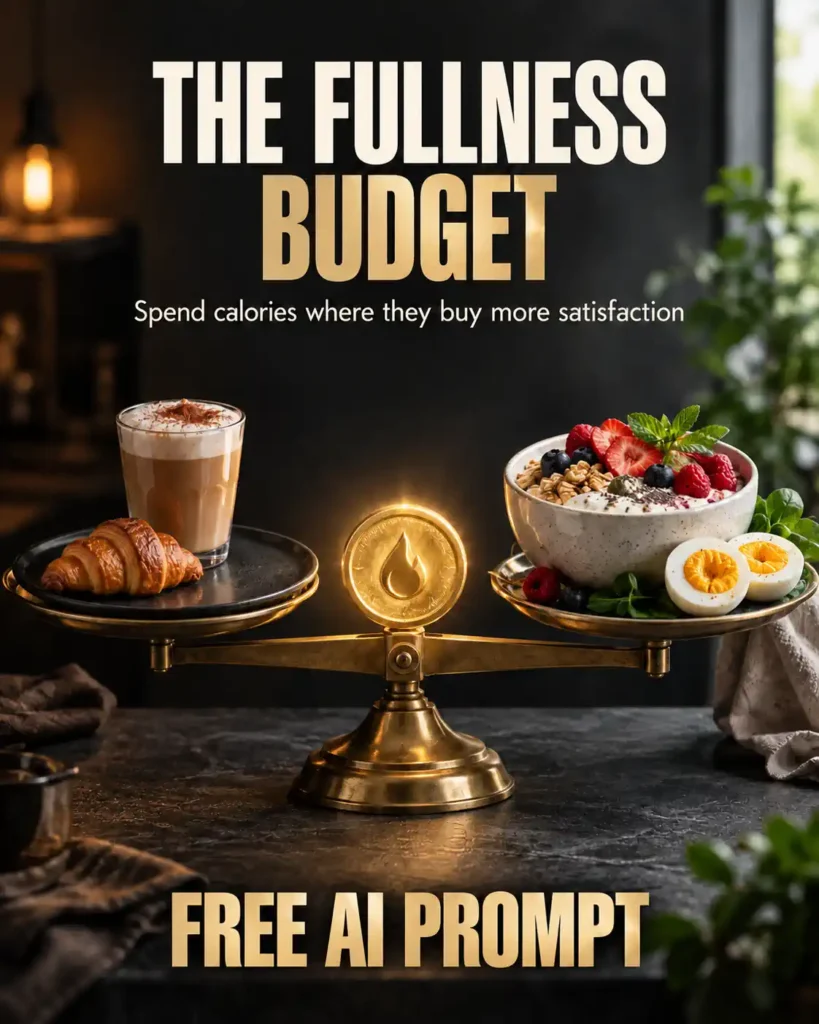
The Satiety Index: When people reduce calories to lose weight, they often treat every calorie as if it buys the same amount of relief from hunger. It doesn’t.
So, Spend Your Calories Where They Buy the Most Satisfaction
That’s the Fullness Budget.
That’s the concept of the Fullness Budget—a practical way to apply the satiety index and calorie density to your everyday meals.
Two meals can contain roughly the same number of calories yet produce completely different experiences over the next four hours. One leaves you satisfied and able to concentrate; the other leaves you opening cupboards, negotiating with yourself, and wondering whether successful weight loss requires permanent hunger.
The difference isn’t necessarily discipline—it’s how effectively the meal spent its calorie budget.
Understanding the Fullness Budget
Think of every meal as having two separate totals: its calorie cost and its fullness return. Most diets concentrate almost entirely on the cost while barely examining the return.
If you repeatedly spend calories on foods that deliver little protein, fibre, volume, chewing, or lasting satisfaction, you can reach your calorie limit while still feeling as though you haven’t properly eaten. The useful question isn’t simply, “How many calories are in this meal?” It’s, “How much comfortable fullness am I buying with those calories?” That is the core of the Fullness Budget.
Five Ways a Meal Earns Its Calories
Fullness doesn’t rely on a single dietary rule; it emerges from several key signals working together:
1. Protein Content
A meal containing a meaningful protein source (such as eggs, Greek yoghurt, cottage cheese, fish, chicken, tofu, beans, or lentils) feels significantly more substantial and complete than one dominated by refined carbohydrates or fat.
2. Dietary Fibre
High-fibre foods require more chewing, add bulk, and slow digestion. Vegetables, fruit, pulses, oats, and whole grains increase physical and sensory presence without requiring a large calorie allocation.
3. Physical Food Volume
What your eyes, plate, and stomach encounter matters. A small pastry and a large bowl of yoghurt with berries and oats may have equal calories, but the larger volume takes longer to eat and creates a clear psychological sense that you have eaten.
4. Calorie Density & Food Volume and Energy Density Management
High-energy-density foods (oils, butter, pastries, chocolate, nuts, cheese) pack substantial calories into tiny portions. They aren’t “bad” foods, but they are expensive purchases from a limited budget. Conversely, foods high in water and fibre provide more physical food for fewer calories.
5. Texture and Eating Speed
Calories swallowed quickly arrive faster than fullness signals can register. Soft or liquid foods require little chewing, whereas contrasting textures that require cutting and deliberate chewing give satiety signals time to develop.
Foods with a high satiety index, like boiled eggs, oats, and fish, keep you fuller for longer
Key Takeaway: Calories determine what a meal costs. Meal structure determines how satisfying that expenditure feels.
The Equal-Calorie Breakfast Test
Consider a 450-calorie breakfast allowance across two scenarios:
- Option A: A large sweetened coffee and a croissant. Fits the calorie target on paper, but contains minimal volume, low protein/fibre, and fast-swallowing textures. Result: Mid-morning hunger and low satisfaction.
- Option B: Plain Greek yoghurt, oats, berries, and a boiled egg. Strengthens protein, adds fibre, increases volume, and requires chewing. Result: Long-lasting fullness for the exact same calorie expenditure.
Redesigning a meal is a substitution exercise, not an accumulation exercise. Don’t simply add healthy foods on top of low-satiety foods; replace the calories delivering the weakest return.
Smart Rules for Meal Substitution
- Identify Low-Return Calories: Sweetened drinks, excessive cooking oils, heavy dressings, or unmeasured handfuls of snacks are often easy areas to recover calories.
- Keep What You Enjoy: Psychological satisfaction matters. If a small portion of cheese or dressing makes a meal enjoyable, keep it.
- Avoid Redundancy: Don’t pay several calorie-dense ingredients to perform one satisfaction role. Pick the single highest-impact ingredient for enjoyment, then let protein, vegetables, or whole grains provide the volume.
Audit the Meal Before Blaming the Diet
When hunger strikes shortly after eating, audit your last meal with these five diagnostic questions:
- Where was the main protein source?
- Which food supplied meaningful fibre?
- How much actual food volume was on the plate?
- Which calorie-dense ingredients consumed the budget fastest?
- Did I eat a recognizable meal, or swallow liquid/quick calories?
Designing a Sustainable Routine with a High Satiety Index
Better meal design makes an appropriate calorie deficit manageable, though it cannot override factors like extreme deficits, sleep disruption, or underlying medical conditions. Persistent hunger should always be evaluated alongside professional healthcare advice.
To start, identify the meal after which hunger most predictably returns. Keep its calorie budget intact, but adjust the structure: strengthen the protein anchor, boost fibre and volume, retain one high-enjoyment element, and eliminate unnoticed filler calories. A successful weight-loss meal doesn’t merely fit the calorie budget—it makes that budget feel larger.